
Vortrag (Präsenzveranstaltung)
Quantitative mechanochemical tools to understand polymer materials
Robert Göstl
Universität Wuppertal

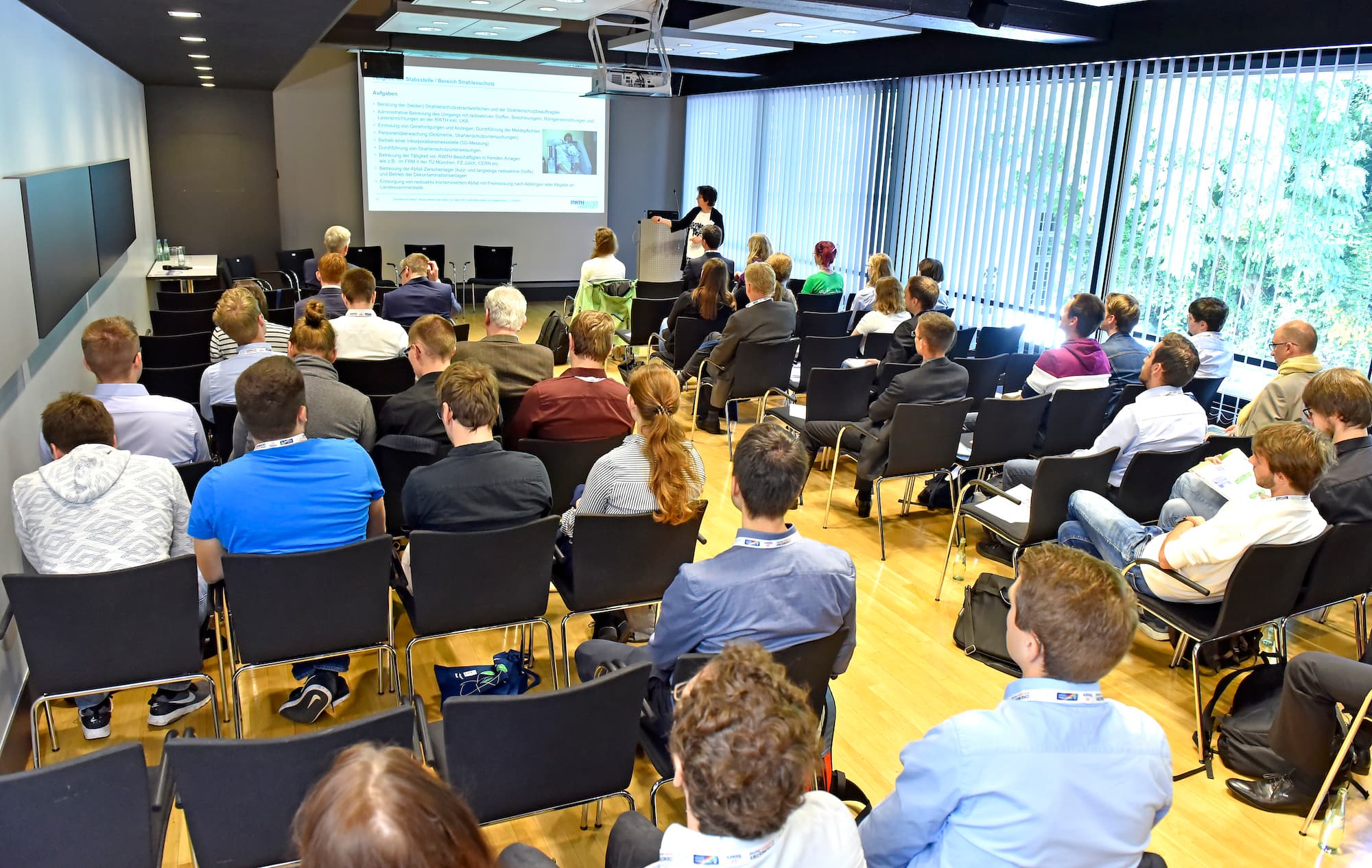
Vortrag (Präsenzveranstaltung)
Universität Wuppertal
One of the grand scientific challenges of our time is how the remarkable properties of matter emerge from the complex correlations of their molecular constituents. We perform research adhering to this principle by following the results of mechanical stress and strain on macromolecular materials, which often requires to survey large samples with molecular level resolution due to the multiscale nature of force.
To do so, we design and synthesize molecular optical force probes (OFPs) and the respective materials made from them in a transdisciplinary approach.[1,2] We mainly employ Diels-Alder adducts of π-extended anthracenes and maleimides reporting over covalent bond scission events due to their sensitive nature and facile tunability of their optical properties.[3,4] We use these OFPs to investigate the mechanical behavior of complex and non-uniform high-performance polymers, such as rubbers and composites,[5] and soft matter, e. g., hydrogels[6] and colloidal hydrogel networks,[7,8] in detail developing novel methodologies. From these experiments, we aim to draw conclusions over the behavior of these materials under force. Eventually, we strive to render these methods quantitative to assess damage in polymer materials holistically and answer the question: How do polymers break?
References:
[1] S. He, M. Stratigaki, S. P. Centeno, A. Dreuw, R. Göstl, “Tailoring the Properties of Optical Force Probes for Polymer Mechanochemistry” Chem. Eur. J. 2021, 27, 15889–15897.
[2] B. V. Asya, S. Wang, E. Euchler, V. N. Khiêm, R. Göstl, “Optical Force Probes for Spatially Resolved Imaging of Polymer Damage and Failure” Aggregate 2025, 6, e70014.
[3] D. Yildiz, C. Baumann, A. Mikosch, A. J. C. Kuehne, A. Herrmann, R. Göstl, “Anti-Stokes Stress Sensing: Mechanochemical Activation of Triplet–Triplet Annihilation Photon Upconversion” Angew. Chem. Int. Ed. 2019, 58, 12919–12923.
[4] C. Baumann, M. Stratigaki, S. P. Centeno, R. Göstl, “Multicolor Mechanofluorophores for the Quantitative Detection of Covalent Bond Scission in Polymers” Angew. Chem. Int. Ed. 2021, 60, 13287–13293.
[5] M. Stratigaki, C. Baumann, R. Göstl, “Confocal Microscopy Visualizes Particle–Crack Interactions in Epoxy Composites with Optical Force Probe-Cross-Linked Rubber Particles” Macromolecules 2022, 55, 1060–1066.
[6] M. Stratigaki, C. Baumann, L. C. A. van Breemen, J. P. A. Heuts, R. P. Sijbesma, R. Göstl, “Fractography of poly(N-isopropylacrylamide) hydrogel networks crosslinked with mechanofluorophores using confocal laser scanning microscopy” Polym. Chem. 2020, 11, 358–366.
[7] E. Izak-Nau, S. Braun, A. Pich, R. Göstl, “Mechanically Resistant Poly(N-vinylcaprolactam) Microgels with Sacrificial Supramolecular Catechin Hydrogen Bonds” Adv. Sci. 2022, 9, 2104004.
[8] S. He, S. Schog, Y. Chen, Y. Ji, S. Panitz, W. Richtering, R. Göstl, “Photoinduced Mechanical Cloaking of Diarylethene-Crosslinked Microgels” Adv. Mater. 2023, 35, 2305845.